Stromal Vascular Fraction (SVF): A cellular therapy obtained from fat tissue that contains stem/stromal cells.
What Is SVF?
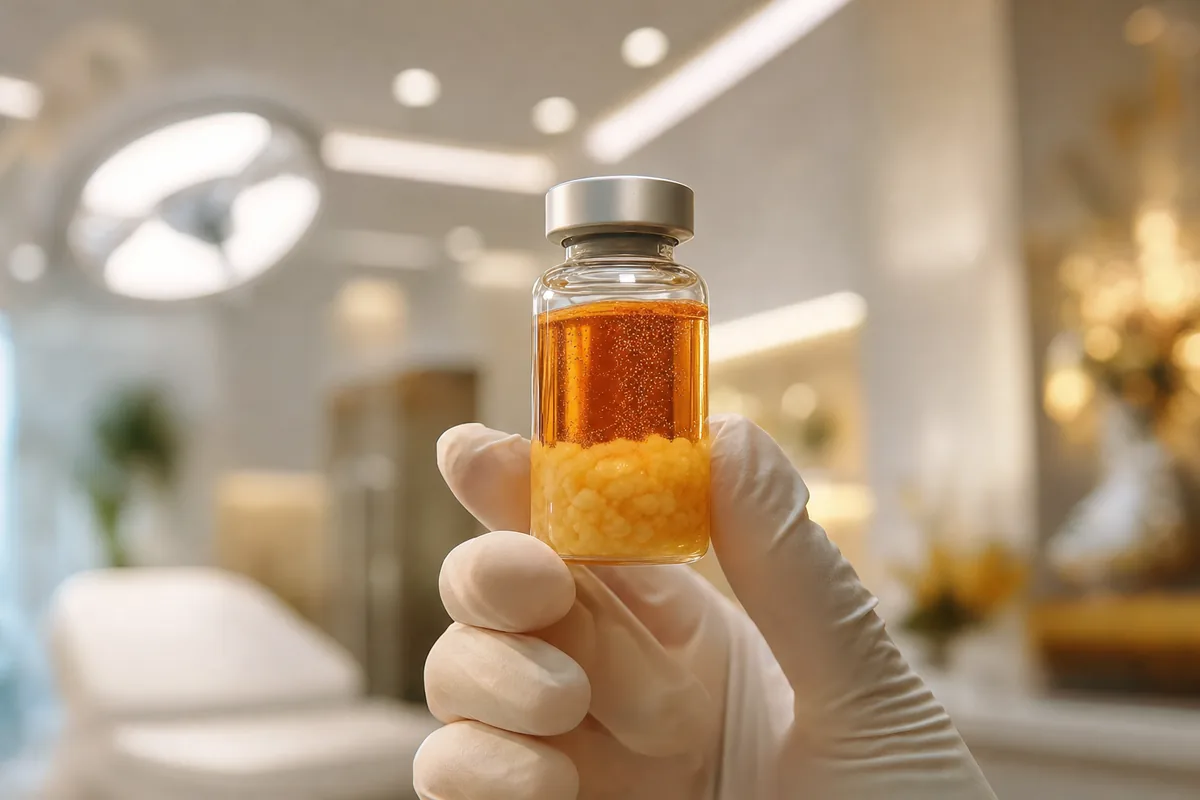
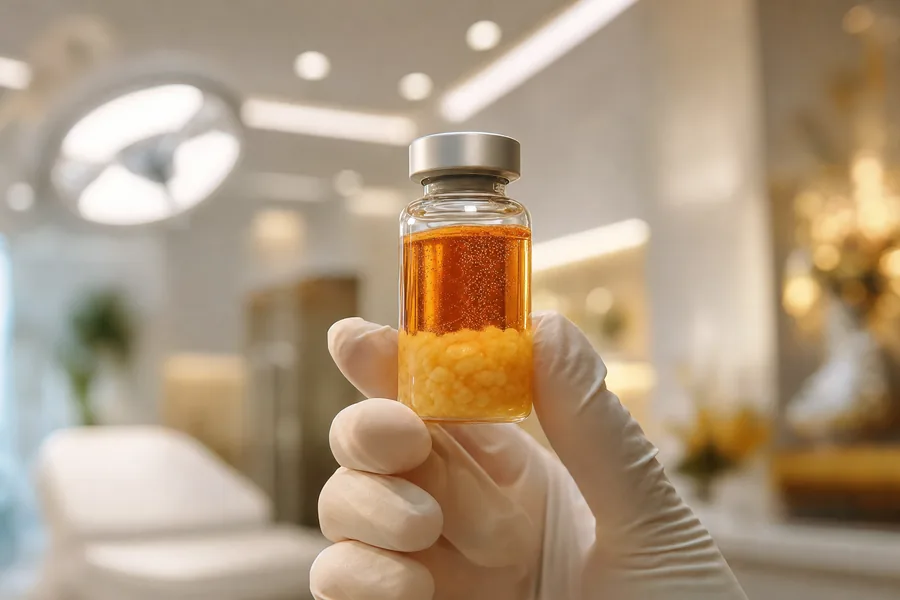
Stromal Vascular Fraction (SVF) is a multi-component cellular therapy obtained from the person's own fat tissue; in addition to fat-derived stem/stromal cells, it also contains various cell groups involved in tissue renewal and repair.
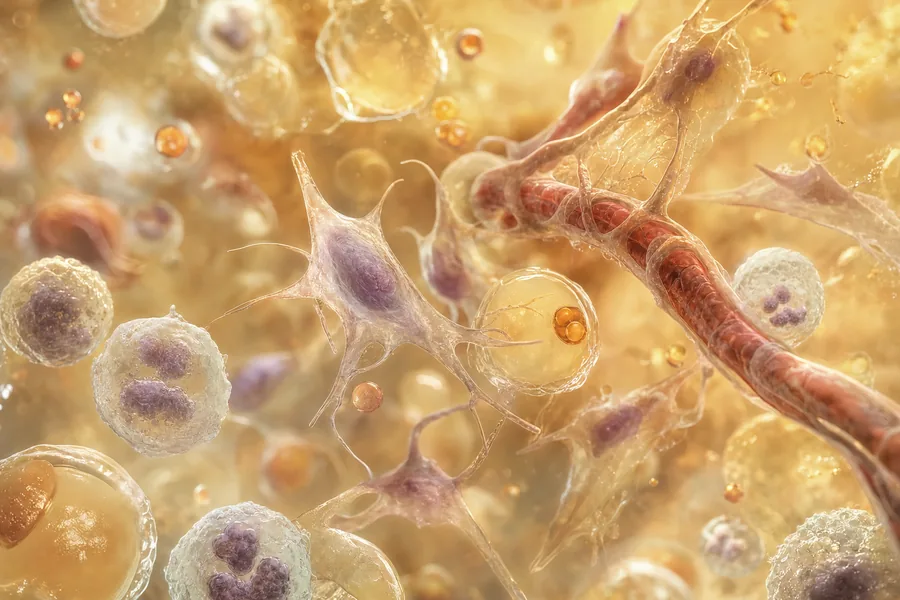
Our fat tissue does not consist of fat cells alone. Around the fat cells there are numerous cells involved in tissue renewal, support of the vascular structure and repair processes.
SVF contains;
- fat-derived stem/stromal cells,
- progenitor cells,
- cells associated with the vascular structure,
- pericytes,
- fibroblasts,
- various cell groups associated with the immune system
together.
For this reason, SVF should not be thought of as a single-cell-type therapy.
The most important feature of SVF is that, instead of a single cell type, it contains many regenerative cells together, including stem/stromal cells.
How Is SVF Obtained?
In our clinic, SVF is prepared using a mechanical, i.e. non-enzymatic, method.
First, a small volume of the person's own fat tissue is harvested by liposuction from a suitable area such as the abdomen, waist, hips or thighs.
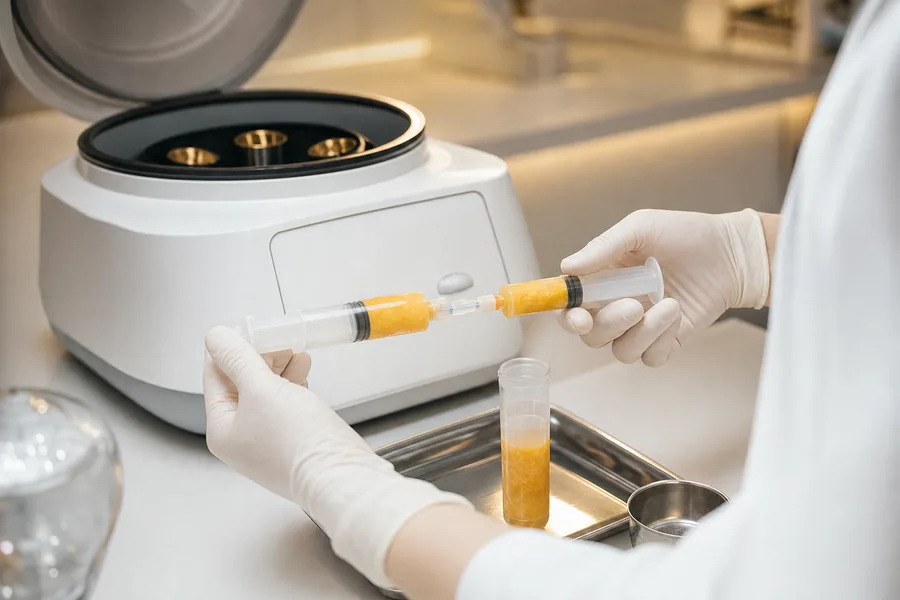
The harvested fat tissue is concentrated through special processing. Mechanical separation, centrifugation and washing steps are then applied to obtain a cell-rich stromal vascular fraction.
- No enzymes are used in the method we use.
- The cells are not multiplied in a laboratory for weeks.
- SVF can be prepared from the person's own fat tissue and applied within the same procedure.
In this respect, SVF is an autologous cellular therapy obtained from the person's own tissue.
How Is SVF Applied?
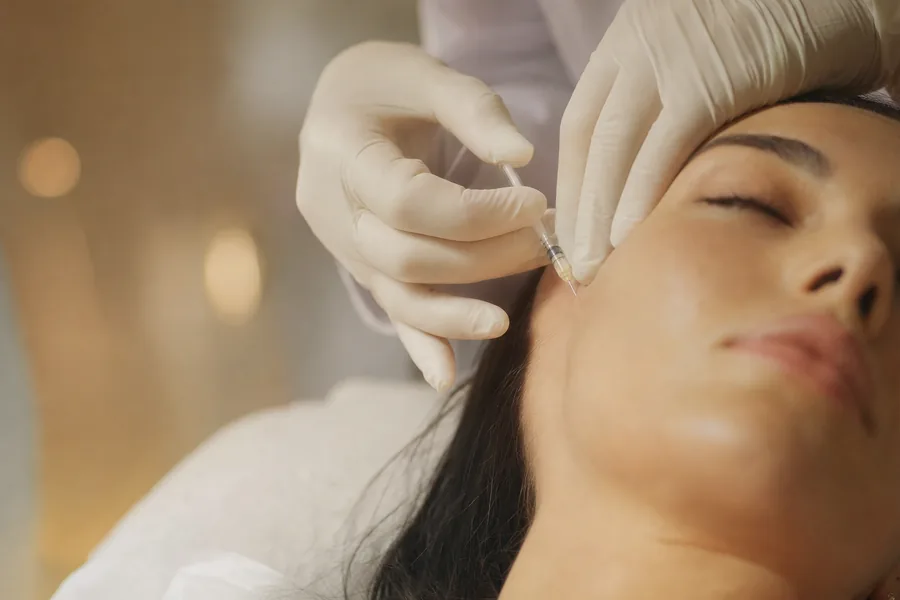
The prepared SVF is applied to the appropriate tissue plane using fine needles or cannulas, depending on the area to be treated.
The face, neck, backs of the hands and scalp are among the most common treatment areas.
SVF Is Not a Filler
While the main aim of a filler is to add volume, the main aim of SVF is to support the tissue's own renewal and repair processes.
For this reason, the effect of SVF does not come only from the volume injected, but from the interaction of the applied cells and the cellular environment with the tissue.
Can Fat Injection Be Performed at the Same Time as SVF?
Yes. In suitable patients, fat injection using the person's own fat can also be performed in the same session as SVF.
The aims of these two procedures are different. Fat injection is applied primarily to replace lost volume and correct contours, whereas SVF is applied to support the tissue's regenerative processes.
Particularly in patients who also have facial volume loss, fat injection and SVF can be used together within the same treatment plan when considered necessary.
Which patients will receive SVF alone and which will receive SVF together with fat injection is determined individually after an examination.
In Which Cases Can SVF Be Applied?
SVF, particularly for regenerative and aesthetic purposes, may be considered in cases such as;
- loss of facial skin quality,
- dull, lifeless-looking skin,
- thinning of the skin and loss of elasticity,
- fine wrinkles,
- signs of ageing in the neck area,
- loss of skin quality on the backs of the hands,
- certain marks and scars,
- hair thinning, loss of hair quality and suitable types of hair loss
and similar conditions.
The main aim of SVF is not to add volume to the tissue but to support the tissue's regenerative capacity.
Therefore, it is not expected on its own to replace surgical procedures in patients with advanced excess skin or marked sagging, or volumising procedures in patients with marked volume loss.
When Does the Effect of SVF Begin?
The effect of SVF is not immediate as it is with botox or fillers.
The cellular and regenerative process begins after the application; visible changes appear over time.
In skin applications, patients may begin to notice the first changes from the first weeks onwards.
Changes in skin quality, tissue texture and elasticity usually become more noticeable over the following months.
In hair applications, because of the natural hair growth cycle, assessing the results takes longer and is usually done over a period of 3–6 months.
How Long Does the Effect of SVF Last?
SVF is a biological, cellular therapy. It is therefore not accurate to give the same duration for every patient.
The changes produced by the treatment develop over time, and the person's natural ageing process continues.
The aim of SVF is not so much to create a temporary volume effect as to support the tissue's own renewal processes.
The duration of the result;
- the person's age,
- skin or hair structure,
- the treated area,
- the characteristics of the cellular product,
- the person's lifestyle and
- their individual biological response
may vary depending on these factors.
What Does the Effect of SVF Depend On?
It is not accurate to judge the success of SVF solely by the question “how many cc were injected?”.
The outcome of the treatment;
- the amount of cells obtained,
- the viability of the cells,
- the characteristics of the fat tissue,
- the preparation technique,
- the content of the applied cellular product,
- the treatment area,
- application to the correct tissue plane
- and the person's individual biological response
depends on these factors.
In SVF, not only the cell count but also cell viability and how the product is prepared are important.
Two people from whom the same amount of fat tissue is harvested are not expected to yield exactly the same cellular product.
What Can Influence the Effect of SVF?
A person's lifestyle and existing tissue characteristics may influence the regenerative response.
In particular;
- smoking,
- heavy sun exposure,
- the existing degree of skin damage,
- the type and duration of hair loss,
- the person's age,
- general health,
- certain medications and
- the person's healing capacity
may affect the outcome of the treatment.
For this reason, SVF is a personalised treatment and results are not identical in every patient.
What Can Be Done If I Do Not Have Enough Body Fat?
To prepare SVF, the person must have a sufficient amount of fat tissue that can be harvested by liposuction.
If the patient has sufficient fat tissue, SVF may be chosen as a multi-component cellular therapy option containing stem/stromal cells.
In patients who are very thin and from whom sufficient fat tissue cannot be obtained by liposuction, autologous fibroblast therapy may be considered as a second option, particularly to support skin quality.
Fibroblast Therapy Is Not the Same as SVF
Fibroblast therapy is an alternative cellular therapy that may be considered in some patients who do not have sufficient fat tissue.
Is “Stem Cell Therapy from Behind the Ear” Really Stem Cell Therapy?
No.
The treatment in which a small skin sample is taken from behind the ear and cells are isolated from this tissue and multiplied in a laboratory is essentially autologous fibroblast therapy.
A Fibroblast Is Not a Stem Cell
A fibroblast is a mature connective tissue cell that occurs naturally in the skin and is involved particularly in the production of collagen and extracellular matrix structures.
Therefore;
- Producing fibroblasts from skin taken from behind the ear = fibroblast therapy.
- Calling it “stem cell therapy from behind the ear” is not scientifically accurate.
What Is the Difference Between SVF from Fat Tissue and Fibroblasts from Behind the Ear?
| Feature | Stromal Vascular Fraction (SVF) | Autologous Fibroblast |
|---|---|---|
| Source | The person's own fat tissue | Skin taken from behind the ear |
| Method of obtaining | Mechanical preparation after small-volume liposuction | Laboratory processing after a skin biopsy |
| Preparation time | Can be prepared within the same procedure | Weeks are needed to multiply the cells |
| Cellular composition | Contains many different cell groups together | Consists mainly of fibroblast cells |
| Does it contain stem/stromal cells? | Yes | No – a fibroblast is not a stem cell |
| Are cells multiplied in a laboratory? | No | Yes |
| Approach | Multi-component cellular regenerative therapy | Therapy targeting a single cell type |
SVF or Fibroblasts?
The biological nature of the two treatments is different.
SVF is a multi-component cellular therapy that also contains stem/stromal cells.
In SVF, different regenerative cell groups are present together in the same product.
Fibroblast therapy, on the other hand, essentially uses a single cell type, namely fibroblasts.
For this reason, fibroblast therapy and SVF are not the same.
If a multi-component cellular therapy that also contains stem/stromal cells is desired and the patient has sufficient fat tissue, SVF is a treatment option that may be considered for this purpose.
Fibroblast therapy, by contrast, may be considered particularly in patients who do not have sufficient fat tissue or who require a different treatment plan.
In Brief
- Stromal Vascular Fraction (SVF) is a multi-component cellular therapy obtained from the person's own fat tissue that also contains fat-derived stem/stromal cells.
- In our clinic, SVF is prepared using a mechanical method, without the use of enzymes.
- Without multiplying the cells in a laboratory for weeks, SVF can be obtained and applied within the same procedure.
- SVF contains not just a single cell type but various regenerative cell groups together, including stem/stromal cells.
- In suitable patients, fat injection using the person's own fat can also be performed in the same session as SVF.
- Producing fibroblasts from a skin sample taken from behind the ear, however, is not stem cell therapy but fibroblast therapy.
- For patients who want a cellular therapy containing stem/stromal cells and who have sufficient fat tissue, SVF is one of the main cellular therapy options that may be considered.
Whether the treatment is suitable for you, which areas it can be applied to and whether it needs to be combined with fat injection are determined individually after an examination.
Frequently Asked Questions
Is SVF the Same as Stem Cell Therapy?
SVF is a multi-component cellular therapy that also contains fat-derived stem/stromal cells. It contains not only stem cells but also progenitor cells, pericytes, fibroblasts, and various cell groups associated with the vascular structure and the immune system.
Are Enzymes Used to Prepare SVF?
No. In our clinic, SVF is prepared using a mechanical, i.e. non-enzymatic, method. The cells are not multiplied in a laboratory for weeks; SVF can be prepared from the person's own fat tissue and applied within the same procedure.
Is SVF a Filler?
No. The main aim of a filler is to add volume, whereas the main aim of SVF is to support the tissue's own renewal and repair processes. In suitable patients who also have volume loss, SVF can be applied in the same session together with fat injection using the person's own fat.
When Are the Results of SVF Seen?
The effect of SVF is not immediate. In skin applications, the first changes may be noticed from the first weeks onwards; more noticeable changes usually appear over the following months. In hair applications, results are usually assessed over a period of 3–6 months.
I Am Very Thin. Can SVF Be Performed?
To prepare SVF, there must be a sufficient amount of fat tissue that can be harvested by liposuction. In patients from whom sufficient fat tissue cannot be obtained, autologous fibroblast therapy may be considered as a second option, particularly to support skin quality.
Is Cell Therapy Using Tissue from Behind the Ear Stem Cell Therapy?
No. The treatment in which cells are isolated from a skin sample taken from behind the ear and multiplied in a laboratory is autologous fibroblast therapy. A fibroblast is a mature connective tissue cell and is not a stem cell.
Can SVF Be Applied to Everyone?
No. Whether the treatment is suitable, which areas it can be applied to and whether it needs to be combined with fat injection are determined individually after an examination.