Stromal vascular fraction (SVF) (stem cell) treatments have in recent years become one of the prominent methods in skin renewal and regenerative aesthetics in Istanbul. However, one of the most frequently asked questions about this treatment is: “Why aren't the results seen immediately?”
The answer to this question lies in SVF's working principle. Unlike conventional aesthetic procedures, this treatment does not create instant plumpness or a superficial change; it initiates a biological renewal process that takes place at tissue level.
Accessing accurate information about SVF treatments is critically important for forming realistic expectations. Assoc. Prof. Dr. Çiğdem Karadağ explains this process transparently to her patients, aiming for natural and sustainable results.
For a preliminary consultation with Assoc. Prof. Dr. Çiğdem Karadağ, you can fill in the appointment form.
What Is SVF Treatment?
Stromal vascular fraction (SVF) treatment is one of the current approaches in regenerative medicine, using cellular components obtained from the person's own fat tissue. By activating the body's natural capacity for repair and renewal, this method aims to support the healing of tissue damage, improve skin quality and offer a supportive solution for some joint problems.
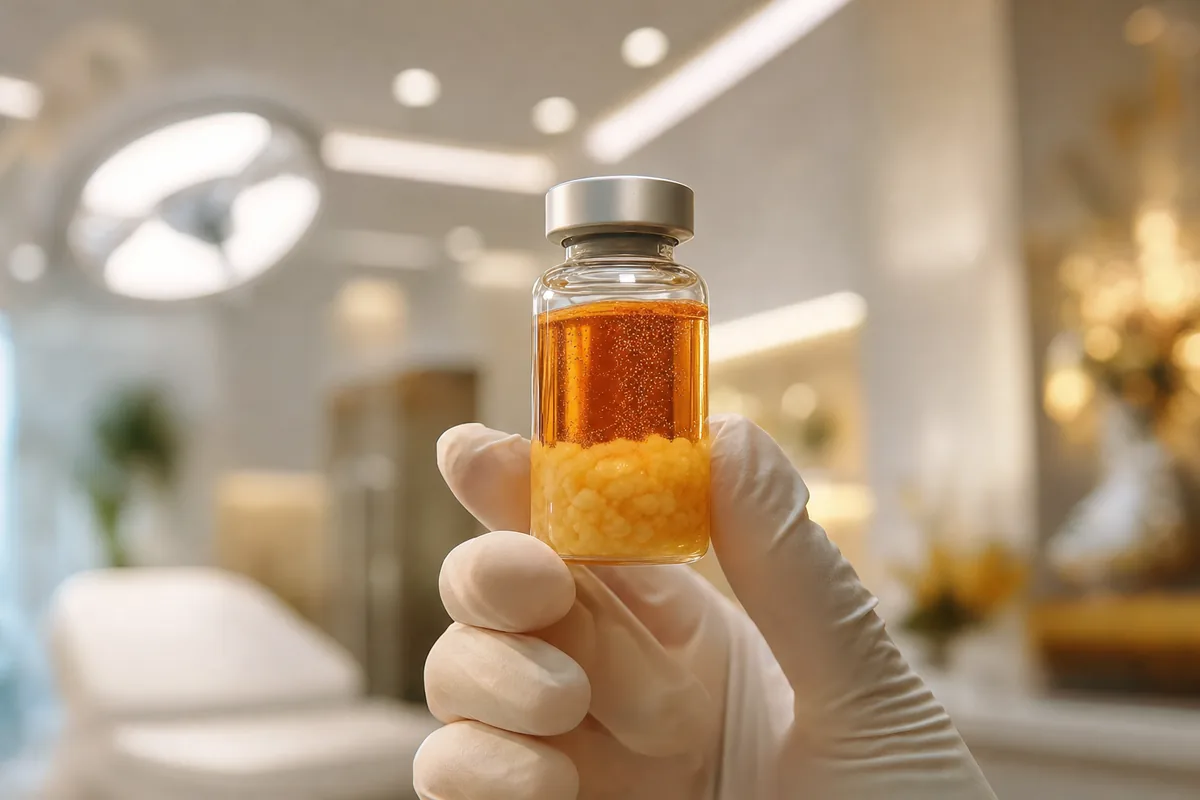
In SVF treatment, fat tissue, usually harvested by liposuction, undergoes special processing to obtain a cell-rich content. This contains mesenchymal stem cells, collagen-producing fibroblasts, pericytes that stimulate increased blood supply, anti-inflammatory macrophages and various supporting cells. By initiating a renewal process at cellular level in the area where it is applied, this mixture helps the tissue achieve a healthier and more balanced structure over time.
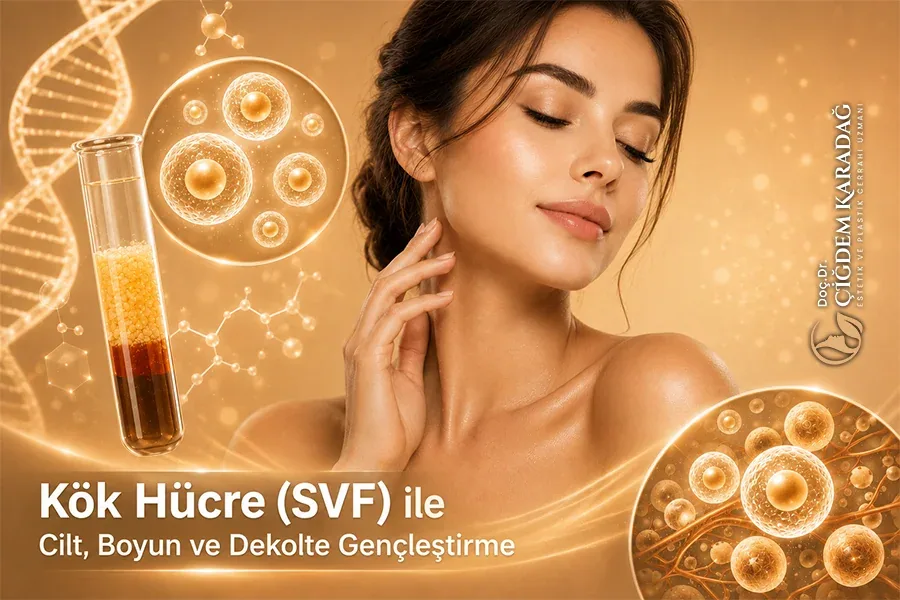
How Does SVF (Stem Cell) Treatment Work?
The basic aim of SVF treatment is not to give the skin temporary volume from the outside.
The real goal is:
- To activate the skin's own renewal capacity
- To initiate a repair process at cellular level
- To support collagen production
After the treatment:
- A “stimulation process” begins within the tissue
- Cellular activity increases
- Blood supply is supported
- The connective tissue undergoes restructuring
In patients who have the treatment, this process generally becomes visible over time.
Why Don't the Results Appear Immediately?
The most important feature of SVF treatment is that its effect develops over time.
The Biological Process Is Not Instant
Skin renewal is not something that happens in seconds. Cells renewing themselves and new tissue forming takes a certain amount of time.
Collagen Production Takes Time
The reorganisation of collagen fibres and the production of new collagen:
- Does not happen within days
- Takes place over weeks and months
The First Effect and the Real Result Are Different
In the first weeks:
- A slight vitality in the skin
- Increased radiance
may be observed.
However, the real change in:
- Skin thickness
- Elasticity
- Tissue quality
emerges over time.
How Does the SVF Process Progress?
The effect of SVF treatment develops in stages.
The First Weeks
- A slight vitality is noticed
- The skin begins to look healthier
Medium Term (4–8 Weeks)
- Tissue quality begins to improve
- A feeling of firmness develops in the skin
Long Term (2–6 Months)
- Collagen production becomes evident
- The skin looks more even and balanced
- The main structural change appears during this period
In practice, this process may vary from person to person.
What Is the Aim of SVF Treatment?
The aim of SVF treatment is:
- Not to create a rapid aesthetic change
- It is to aim for natural and long-lasting improvement
In this approach, the goal is:
- Not a sudden change in appearance, but a long-lasting result.
- A tissue structure that matures over time.
For this reason, SVF provides:
- not a “filler effect”
- but a “renewal effect”
Why Are Realistic Expectations Important?
One of the most common mistakes in aesthetic treatments is expecting to see results immediately.
With SVF treatment:
- Patience is part of the process
- Results develop gradually
- A natural appearance is the priority
Assoc. Prof. Dr. Çiğdem Karadağ explains this process to her patients in detail, ensuring that expectations are managed correctly.
Who Is SVF Suitable For?
SVF treatment is generally suitable for people who:
- Want to improve their skin quality
- Are experiencing a loss of elasticity
- Want to support their natural renewal process
- Want fine wrinkles to be reduced
- Have uneven skin tone and brown spots
- Are looking for non-surgical solutions
These are the people it suits.
However, it may not be suitable for every patient. A specialist assessment is always necessary to achieve the right results.
Are SVF Results Permanent?
The results obtained with SVF treatment,
- since they take place at cellular level
- and arise through natural processes,
can last for a long time.
However:
- The ageing process
- Lifestyle
- Dietary habits
- Smoking and alcohol use
- Skin care
affect how long the results last.
Frequently Asked Questions
Is SVF Treatment Painful?
It is a procedure that can be performed comfortably under local anaesthesia and causes minimal pain.
When Are SVF Results Seen?
The first effects are seen within a few weeks, but the main results appear from the 3rd month onwards and the effect continues to increase.
Is SVF Like a Filler?
No. SVF does not add volume like a filler; it is in liquid form. If desired, it can be combined with fat grafting to increase the longevity of the fat graft.
Is a Single SVF Session Enough?
It depends on the person's needs. In some cases a single session may be enough. If the patient is satisfied with the result and wishes to have it a 2nd time, SVF treatment can be repeated after at least 6 months.
Can SVF Be Applied to Everyone?
No. Suitability must always be assessed by a specialist physician.