Breast augmentation is a surgical procedure women undergo to give their breasts the size and shape they desire. This guide aims to provide comprehensive information about the breast augmentation surgery process, techniques, risks, aftercare and effects on quality of life.
The Breast Augmentation Surgery Process
Pre-operative assessment and planning
Before deciding on breast augmentation surgery, a detailed assessment and planning process is carried out with your plastic surgeon. During this process:
- The patient's expectations and ideal breast size are determined.
- Information is given about implant selection and the placement technique.
- The patient's general health is taken into account and the necessary tests are carried out.
The day of surgery and the procedure
On the day of surgery, the process in hospital is as follows:
- Hospital admission procedures are completed.
- Anaesthesia is administered and the operation begins.
- The implants are placed and the incisions are stitched.
- After the operation, the patient wakes up and is kept under observation for a while.
- With the surgeon's approval, the patient is discharged the same day or one day later.
Post-operative recovery and follow-up
The post-operative recovery process is as follows:
- Pain and swelling may occur in the first week, but these are controlled with medication.
- The first check-up takes place after 1 week and the stitches are removed.
- The patient can return to daily activities within 1-2 weeks.
- Regular check-ups are carried out throughout the recovery period, and it is important to follow the surgeon's recommendations.
Breast Augmentation Surgery Techniques
Implant options
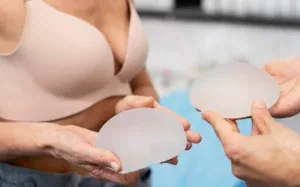
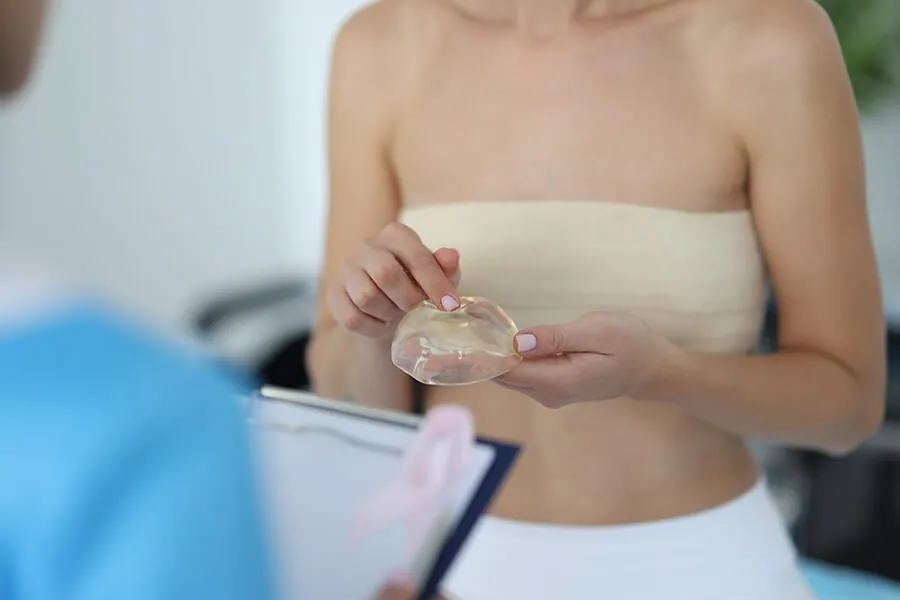
The implants used in breast augmentation surgery are of two types: silicone-filled and saline (salt water)-filled. Both options come in implants of various sizes, shapes and structures. The ideal implant is determined according to the patient's expectations and body structure.
Implant placement techniques
Implants can be placed under or over the chest muscle. Each technique has advantages and disadvantages, and the choice is made in line with the surgeon's recommendation.
Submuscular placement: Placing the implant under the chest muscle allows a shorter operation time. However, the recovery period is slightly longer.
Subglandular (over-the-muscle) placement: Placing the implant over the chest muscle provides a natural appearance and faster recovery.
Non-implant methods (fat injection)
In breast augmentation surgery, natural fat injection without implants may also be preferred. In this method, fat cells taken from the patient's own body are injected to increase the volume of the breasts. A more natural result can be achieved than with implants, but the enlargement achieved with this method is limited.
You can also take a look at this news story about breast augmentation: Go to the article (in Turkish)
Risks and Complications of Breast Augmentation Surgery
Surgery-related risks
As with any surgical procedure, breast augmentation surgery carries some risks:
- Anaesthesia-related risks
- Risk of bleeding and infection
- Tissue damage and loss of sensation
- Asymmetry and unwanted aesthetic results
Implant-related risks
The risks associated with the use of breast implants are as follows:
- Implant leakage or rupture
- Capsular contracture (hardening of the tissue around the implant)
- Implant displacement or rotation
- Unwanted changes in breast shape
Possible long-term complications
The long-term complications of breast augmentation surgery include:
- Implant lifespan and the need for replacement
- Scar formation on the chest
- Difficulty in breast cancer screening
- Aftercare and Check-ups Following Breast Augmentation Surgery
Points to consider during recovery
Points to consider during the post-operative recovery period are as follows:
- Taking the painkillers and antibiotics recommended by the surgeon regularly
- Keeping the operated area clean and dry
- Not lifting heavy objects and avoiding sudden movements during recovery
- Not doing sport for the period recommended by the surgeon and avoiding activities that put pressure on the chest area
Care of stitches and scars
Care of stitches and scars is important:
- Dressing the wound area as recommended by the doctor
- Being careful when bathing during recovery and not irritating the wound area
- Attending the check-up on the date specified by the doctor to have the stitches removed
- Regularly using the creams and ointments recommended by the doctor so that the scars heal faster and better
Regular check-ups and mammography
Regular check-ups are important after breast augmentation surgery:
- The first check-up is generally carried out after 1 week and the stitches are removed.
- During recovery, check-ups should be attended at the intervals specified by the doctor.
- Breast health should be monitored with mammography and ultrasound scans, and the condition of the implants should be followed up.
Breast Augmentation Surgery Cost and Pricing
The cost of breast augmentation surgery varies depending on several factors:
- The surgeon's experience and expertise
- The type and quality of the implant chosen
- The hospital or clinic where the operation will be performed
- The medication and materials to be used during the surgical process
When assessing the cost of surgery, it is important to choose a surgeon you trust and who is experienced, rather than an inexpensive option. Also bear in mind that there may be additional costs for post-operative check-ups and possible complications.
Breast Augmentation Surgery and Insurance Coverage
Whether breast augmentation surgery is covered by insurance generally depends on the country and the insurance company. Breast augmentation operations performed for aesthetic purposes are generally not covered by insurance. However, breast reconstruction operations, especially for patients who have lost a breast due to cancer, may be covered. You can contact your insurance company for information on coverage and procedures.
Deciding on Breast Augmentation Surgery
When deciding on breast augmentation surgery, you should consider the following:
- The advantages and disadvantages of the operation
- The type of implant to be chosen and the placement technique
- The cost of the operation and insurance coverage
- Life after surgery and regular check-ups
During this process, you should share all your questions with your doctor and obtain the information that will help you make the right decision. It is also important to choose a surgeon you trust who has successful surgical results.
In conclusion, breast augmentation surgery is an aesthetic procedure that positively affects women's physical appearance and quality of life. The procedure can be performed using implants or with natural fat injection. For a successful operation and long-term satisfaction, it is important to choose an experienced surgeon and to pay attention to post-operative care and regular check-ups.
Breast Augmentation Surgery Before and After Photos
Before and after photos of breast augmentation surgery are important for seeing the surgical results of your doctor's previous patients and for shaping your expectations. Photos allow you to assess your surgeon's experience and success. By comparing the results of different implant types and placement techniques, you can also identify the most suitable option for you.
Breast Augmentation Surgery and Breast Cancer Risk
There is no scientific evidence that breast augmentation surgery and the use of implants increase the risk of breast cancer. However, the presence of implants can make breast cancer screening (mammography and ultrasound) somewhat more difficult. Implants can sometimes prevent the breast tissue from being fully imaged. For this reason, women who have had breast augmentation surgery are advised to work with a more experienced radiologist for breast cancer screening.
The Need for a Breast Lift (Mastopexy) After Breast Augmentation Surgery
In some cases, after breast augmentation surgery, a breast lift (mastopexy) may be needed because of the shape and sagging of the breasts. Mastopexy gives the breasts a firmer, more youthful appearance. Breast augmentation and breast lift are two different procedures that can be performed at the same time or separately. Depending on your needs and your doctor's recommendation, you can combine these procedures or plan them at different times.
Ideal Candidates for Breast Augmentation Surgery
The ideal candidates for breast augmentation surgery are:
- Women who are dissatisfied with the size or shape of their breasts
- Women who have experienced a decrease in breast volume due to childbirth, breastfeeding or weight loss
- Women with breast asymmetry who wish to correct it
- Women in good physical and mental health
- Women with realistic expectations who understand the results of surgery
Before planning breast augmentation surgery, you can identify the most suitable option for you by sharing all your health conditions and expectations with your doctor. Learning about the surgical process and its results will help you go through the procedure more comfortably and successfully.
Plastic and Aesthetic Surgeon: Assoc. Prof. Dr. Çiğdem Karadağ
Plastic, reconstructive and aesthetic surgery specialist Assoc. Prof. Dr. Çiğdem Karadağ has been working in the field of aesthetic surgery since 2009 and performs breast augmentation operations. Each patient's expectations and body structure are assessed at the consultation, and the surgical plan is prepared individually in line with current techniques.
Breast Augmentation Specialist on Bağdat Avenue: Assoc. Prof. Dr. Çiğdem Karadağ
Serving patients from her office on Bağdat Avenue, Istanbul, Assoc. Prof. Dr. Çiğdem Karadağ offers her patients a comprehensive breast augmentation service there. Easily accessible, particularly for patients living on the Asian side of Istanbul, the Bağdat Avenue office welcomes patients in a modern and comfortable setting. Here, our specialist doctor meets her patients one-to-one, provides detailed information about breast augmentation and plans the process from the very beginning.
Assoc. Prof. Dr. Çiğdem Karadağ: Breast Aesthetics Specialist in Istanbul
Assoc. Prof. Dr. Çiğdem Karadağ, a surgeon in Istanbul specialising in breast aesthetics, offers her patients the most suitable methods and techniques for breast augmentation. Providing detailed information on implant selection, placement techniques and post-operative care, Dr. Karadağ ensures that her patients feel safe and informed at every step. Patients considering breast aesthetic surgery can discuss every stage of the process in detail during the consultation.
Frequently Asked Questions: Breast Augmentation
How is the most suitable implant type for breast augmentation determined?
The most suitable implant type for breast augmentation is determined by taking into account the patient's body structure, expectations and the doctor's experience. When choosing between silicone and saline-filled implants, factors such as size, shape and texture are taken into consideration.
How visible are the scars after breast augmentation and how can they be reduced?
The scars that may form after breast augmentation vary depending on the surgical technique and the patient's skin type. Their visibility can be reduced by following the care routine recommended by the doctor during the healing period and by using sunscreen.
When can I start sport and exercise after breast augmentation?
Light exercise and walking can generally be started within 2-3 weeks after breast augmentation. However, returning to intensive sporting activities and weight lifting requires the doctor's approval and generally a wait of 6-8 weeks.
Is breastfeeding possible after breast augmentation?
After breast augmentation, most women can continue to breastfeed when the correct techniques are used. However, careful planning is important so that the implants do not damage the breast tissue and milk glands.
How long does a breast augmentation last and when should the implants be replaced?
The lifespan of the implants used in breast augmentation generally ranges from 10 to 15 years. However, as every patient's situation is different, replacement should be planned according to regular check-ups and the doctor's recommendations.