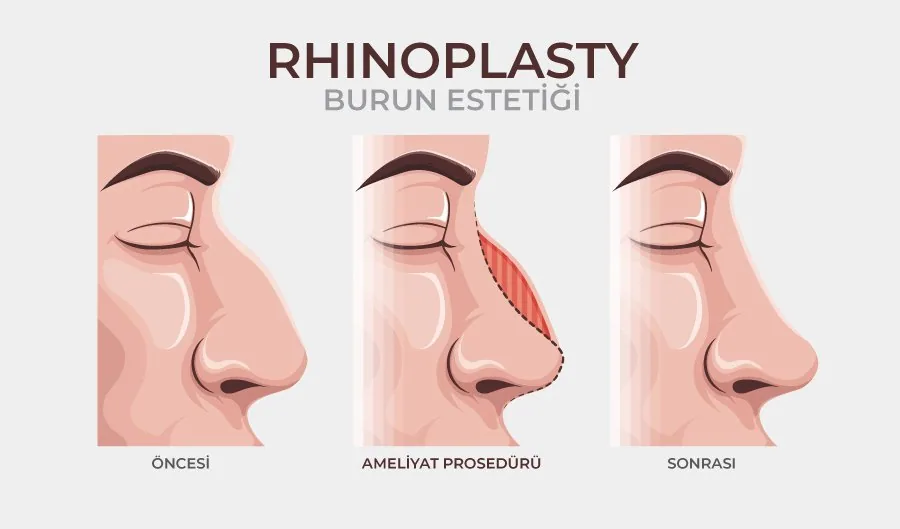
Rhinoplasty (in Turkish) is a surgical procedure performed to change the shape and appearance of the nose. It is also known as a nose job. The procedure may be performed to correct deformities or curvatures in the shape of the nose, reshape the nasal tip, make the nostrils smaller or larger, and narrow or widen the nasal bridge.
Rhinoplasty can be performed surgically or with non-surgical methods. Surgical rhinoplasty can be performed using an open or a closed technique. Non-surgical rhinoplasty, on the other hand, changes the appearance of the nose using fillers.
The aim of rhinoplasty is to create an aesthetically pleasing nose that suits the patient's face. In addition, rhinoplasty can also be used to correct breathing problems. Rhinoplasty is usually performed to boost a person's self-confidence, to balance the proportions of the face or because of a medical condition. The shape of the nose may change due to genetic factors, age, trauma or congenital deformities.
Rhinoplasty operations are usually performed under general anaesthesia and the procedure takes approximately 2-3 hours. After the procedure, a splint is placed on the nose, and patients may usually experience swelling, bruising and pain for a few days. The recovery process may vary depending on the person's general health, age, skin type and the operation performed.
Rhinoplasty operations generally give permanent results. However, in the post-operative period, the shape of the nose gradually improves as the swelling and bruising subside. Full recovery can take 6-12 months in patients with thin skin and 1-2 years in patients with thick skin.
Although rhinoplasty operations are quite safe, as with any surgical procedure, they also carry potential risks. These include infection, bleeding, reaction to anaesthesia, nasal obstruction, abnormalities in the shape of the nose and the risk of revision surgery. Therefore, before having rhinoplasty, it is recommended to have a detailed consultation with a specialist surgeon and to have your medical history and current state of health assessed. You can contact Assoc. Prof. Dr. Çiğdem Karadağ to get more information about your nasal structure and the rhinoplasty process you will go through.
What is open rhinoplasty?
Open rhinoplasty is performed through a skin incision made in the area between the two nostrils, called the columella. This is one of the most commonly used techniques in rhinoplasty surgery.
Open rhinoplasty lifts the skin and tissues over the nose so that the nasal bones and cartilage can be seen directly. This allows the surgeon to control the shape of the nose more precisely and to see the structures inside the nose better.
Open rhinoplasty provides a wider field of view and easier access to the complex structures of the nose. For this reason, it may be a preferred technique in rhinoplasty surgery.
Open rhinoplasty is usually performed under general anaesthesia, and the length of the operation may vary depending on the size and complexity of the nose. As with other rhinoplasty operations, recovery may involve swelling, bruising and pain lasting for a few weeks or a few months.
Although open rhinoplasty is a preferred technique for rhinoplasty surgery, it may not be suitable for everyone. For this reason, the most suitable technique should be chosen, after a detailed consultation with a specialist surgeon, according to the person's nasal structure and aesthetic goals.
What is closed rhinoplasty?
Closed rhinoplasty is a technique used in rhinoplasty surgery. In closed rhinoplasty, the incisions are located inside the nostrils. In this technique, small incisions are made inside the nostrils to reach the tissues and bones of the nose, and the tissues are reshaped through them.
Compared with the open rhinoplasty technique, closed rhinoplasty is a less invasive approach. For this reason, recovery is generally shorter and may be more comfortable.
Because the incisions are located inside the nostrils, closed rhinoplasty may be less visible. For this reason, patients may have less swelling and bruising on their faces in the post-operative period.
Closed rhinoplasty is used to change the shape and size of the nose. It can also be used for medical reasons such as nasal obstruction, curvature of the bone or cartilage inside the nose, or other health problems affecting the nose.
Closed rhinoplasty is usually performed under general anaesthesia, and the length of the operation may vary depending on the size and complexity of the nose. As with other rhinoplasty operations, recovery may involve swelling, bruising and pain lasting for a few weeks or a few months.
Closed rhinoplasty is an option for many candidates who are suitable for rhinoplasty surgery. However, because the complex structures of the nose are not fully visible, closed rhinoplasty may make the procedure more difficult for the surgeon in some cases, so it should be chosen depending on the surgeon's experience and skill.
How is the choice made between open and closed rhinoplasty?
Open and closed rhinoplasty are two different techniques used in rhinoplasty surgery. The differences between the two techniques and the reasons for choosing each are explained below:
Open Rhinoplasty:
- Open rhinoplasty is a more accurate method for changing the shape and size of the nose. It may be preferred when complex procedures are needed, such as reducing a nasal hump, lifting the nasal tip, reshaping the nostrils (alar base) or correcting the nasal septum.
- Recovery after open rhinoplasty takes longer.
Closed Rhinoplasty:
- Closed rhinoplasty is a less invasive technique performed through small incisions inside the nostrils.
- Because closed rhinoplasty is a less invasive method, recovery may be shorter and more comfortable.
Either technique may be preferred depending on the patient's nasal structure and the goals of the operation. Before performing rhinoplasty, your surgeon will discuss with you which technique they will use and will make recommendations about the option that suits you best.
How should you prepare before rhinoplasty surgery?
- Communicate with Your Doctor: During the pre-operative consultation, you can prepare for surgery by following the instructions your surgeon gives you. You can also ask your doctor about your expectations before and after surgery, pain management, the recovery process and other matters.
- Tell Your Doctor About Your Medical Conditions and Any Health Problems: Give your surgeon information about your medical history, the medicines you take, your allergies and any other medical conditions. This is important for planning the operation and assessing the risks.
- Medications and Dietary Supplements: Stop taking blood-thinning medications such as aspirin and anti-inflammatory drugs at least two weeks before surgery. In addition, you may need to stop taking some dietary supplements that are considered natural blood thinners. You can even tell your doctor about the herbal teas you drink regularly and ask whether you should continue them.
- Stop Smoking: Smoking can adversely affect recovery after surgery. Smoking should be stopped for at least 4 weeks before and after surgery.
- Diet Before Surgery: Following a healthy diet before surgery may speed up recovery. Eating protein-rich foods and vegetables and fruits containing antioxidants may be beneficial.
- Supplies to Help During Recovery: Prepare supplies that may help during recovery after surgery. After rhinoplasty, ice packs, nasal sprays, moisturisers and a soft neck pillow are often needed.
- Post-operative Arrangements: You will not be going to work for a certain period after surgery, so arrange your time off and, if necessary, someone who can help you. Also, as you may need to limit your activities after surgery, set aside enough time to rest. Your doctor will usually issue you with a medical certificate (sick note) after surgery. By passing this certificate on to your workplace, you can go through recovery without any problems.
- A Healthy Mind and Stress Management: Stress and anxiety can slow down recovery. To manage stress before surgery, resting, meditating or talking to a therapist will do you good. Keeping your mind healthy is important, especially so as not to become anxious before anaesthesia and to be able to cope with pain after surgery.
What should you pay attention to after rhinoplasty surgery?
The recovery process after rhinoplasty surgery is important, and a certain process must be followed to achieve successful results. Things to pay attention to after rhinoplasty surgery:
- Rest: Adequate rest after surgery is very important. Resting in bed is recommended for the first few days after surgery.
- Use Cold Compresses: Applying cold compresses to the nose area after surgery can reduce swelling and ease pain. However, cold compresses should be applied to the sides of the nose, not on top of it.
- Take Your Medicines Regularly: Take the medicines recommended by your doctor regularly to relieve pain and discomfort after surgery. In particular, make sure you take the antibiotics your doctor includes in your prescription regularly to reduce the risk of infection.
- Watch Your Diet: Eating light foods is recommended after surgery. It may be necessary to avoid hot and spicy foods. You can also benefit from fruits, vegetables and teas that help reduce swelling (oedema).
- Take Care of Nasal Hygiene: Use the nasal sprays recommended by your doctor regularly. A feeling of nasal congestion is normal and usually decreases with the use of the sprays. Nasal rinses can also keep the internal nasal packing moist and help you breathe more easily.
- Limit Your Physical Activities: After surgery, limit your physical activities for the period recommended by your doctor. Avoid activities such as exercising, heavy lifting, touching your nose or lying face down. Make sure you sleep on your back for at least 1 week.
- Stay Away from Smoking: Smoking after surgery can slow down recovery and increase the risk of infection. For this reason, it is recommended that you stay away from smoking after surgery.
- Stay in Touch with Your Doctor: If you have any problems or concerns after surgery, stay in touch with your doctor. Following your doctor's recommendations can help speed up recovery.