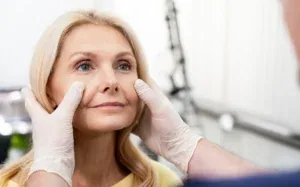
Eyelid Surgery (Blepharoplasty) is a surgical procedure that gives your eyelids a younger, fresher appearance. It can reduce signs of tiredness in the lower eyelids and remove sagging in the upper eyelids.
Although it is generally considered a safe procedure, it carries certain risks. Before surgery, it is important to get information from a physician who is an Aesthetic and Plastic Surgery Specialist in order to examine/learn about the benefits and risks in detail.
Overview
What Is Eyelid Surgery?
Eyelid surgery (aesthetic eyelid surgery) is an aesthetic operation that aims to correct excess skin and tissue around the eyes. As we age, the skin loses its elasticity, which causes skin to accumulate on the upper and lower eyelids. Eyelid surgery removes this excess tissue and can provide a younger appearance. The procedure can be performed on the lower eyelids, the upper eyelids or both.
During the operation, excess skin, muscle and fat are usually removed or repositioned. Although it is mostly performed for aesthetic reasons, in some cases this operation can also improve a field of vision narrowed by drooping upper eyelids.
However, eyelid surgery does not remove dark circles under the eyes or wrinkles such as crow's feet. In such cases, additional aesthetic procedures, fat repositioning or brow lift surgery may be preferred. The procedure can be combined with laser treatments or other facial surgery procedures.

Who Is Suitable for Eyelid Surgery?
The most suitable candidates for the operation are generally people aged at least 30 who are in good general health and have no eye conditions. However, people with the following conditions must inform their doctor before the operation:
- Eye diseases such as glaucoma, dry eye syndrome or retinal detachment.
- Graves' disease or thyroid disorders.
- Cardiovascular disease, high blood pressure or circulation problems.
- Diabetes.
It is important to keep your expectations of the operation realistic. Eyelid surgery can improve your appearance and boost your self-confidence, but it does not fundamentally change your facial structure.
Procedure Details
How Do You Prepare for Eyelid Surgery?
Before the operation, your surgeon may ask you to:
- Have a medical assessment or laboratory tests.
- Stop smoking.
- Adjust the medicines you take or start new medicines.
- Stop taking substances that may increase the risk of bleeding, such as aspirin, blood thinners or herbal supplements.
You may also need to arrange for someone close to you to take you home after the operation and stay with you on the first night.
What Happens During the Operation?
The operation may involve the upper, lower or both eyelids. The technique your surgeon uses may vary depending on your goals.
Upper Eyelid Surgery
Your surgeon makes incisions in the natural crease of the upper eyelid. After excess skin and/or fat tissue is removed, the incisions are closed with aesthetic sutures. It is a procedure that can be performed under local anaesthesia in a clinic setting under sterile conditions.
Lower Eyelid Surgery
On the lower eyelid, a hidden incision is made just below the lash line or on the inner side of the eyelid. Excess skin is removed and, in patients who need it, fat is repositioned.
How Long Does the Operation Take?
An operation on the upper eyelids alone can be completed in 45 minutes to an hour. When the lower and upper eyelids are done together, it can take up to two hours.
The Post-Operative Period
Stitches in the upper and lower eyelids can be removed within a week. Swelling and bruising are normal. Full recovery can generally take a month, but you can return to your social life within 1 week. Applying ice in the first 48 hours after the operation is very important for reducing swelling and bruising.
Risks and Benefits
What Are the Risks of Eyelid Surgery?
As with any surgical procedure, eyelid surgery carries some risks:
- Bleeding and infection.
- Dry eyes.
- Discolouration of the eyelids.
- Scarring.
- Inability to close the eyelids fully.
- Pulling down or sagging of the lower eyelid.
These complications are rare, but you should be aware of the possibilities.
Recovery and Results
Eyelid Surgery Recovery Process
Mild discomfort may be experienced after the operation. Cold compresses and medicines recommended by your surgeon can be used to reduce swelling. Full recovery can take several months.
How Long Do the Results of Eyelid Surgery Last?
The effect of upper eyelid surgery generally lasts 5-7 years. A repeat operation is rarely needed for the lower eyelids.
Additional Information
At What Age Can Eyelid Surgery Be Performed?
The minimum age for this operation is 18, but the most suitable age range is 30 and over. Most people who have the operation are over 40.
A Note from Assoc. Prof. Dr. Çiğdem Karadağ
Eyelid surgery is a procedure that can both improve the aesthetic appearance and offer a solution to field-of-vision problems. If you are interested in the surgery, discuss the risks and benefits in detail with a specialist doctor. Accurate information before surgery is a critical step towards a successful result.
To get preliminary information about eyelid surgery – aesthetic eyelid surgery from Assoc. Prof. Dr. Çiğdem Karadağ, you can book an appointment.