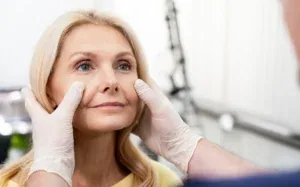
Eye bags are characterised by swelling or puffiness under the eyes that gives the impression of bags or dark circles. This condition can get worse with age, can become a common problem and can make you look tired or older than your years.
The causes of eye bags include various factors such as ageing, genetic predisposition, insufficient sleep and the effects of sun exposure. While less severe bags may improve with lifestyle adjustments, treating other under-eye bags may require surgery.
Fortunately, a range of treatments for bags is available. These options range from optimising sleep patterns to considering the possibility of lower eyelid blepharoplasty (eyelid surgery). It is important to consult a physician to determine the treatment plan that suits you.

What Causes Eye Bags?
Ageing and Skin Elasticity
The cause of eye bags can vary from person to person.
Ageing and changes in skin elasticity contribute to under-eye bags. As we age, our levels of collagen and elastin decrease.
Weakening of the muscles that support the eyelids. Skin and fat may begin to sag, which can cause under-eye puffiness.
Fat accumulation and gravity cause the fat under the eyes to sag downwards, resulting in puffy eyes and bags.
Genetic and Hereditary Factors
Inherited genetic traits can affect the likelihood of developing eyelid bags. Factors such as a tendency to retain fluid and the strength of the skin play an important role in shaping the appearance of the delicate under-eye area.
Lifestyle Factors
Stress can cause dark circles under the eyes.
Lack of sleep can cause the eyes to swell.
Poor nutrition and a lot of processed food can affect fluid retention and swelling.
The main cause of lower eyelid bags may be signs of ageing, but other factors can also affect the appearance of lower eyelid bags. Managing these factors and your lifestyle can help protect the skin around the eyes.
Types of Eye Bags and Treatment Options
Puffy Eye Bags
Fluid retention and inflammation can cause swelling and bags around the eyes.
Home remedies for eye bags:
- Cold Compress: Applying a cold compress around the eyes will constrict the blood vessels and reduce inflammation.
- Hydration: Proper hydration can prevent the fluid retention that causes puffy eyes.
- Sufficient Sleep: Puffy eyes can develop when you are sleep-deprived.
Home remedies may provide temporary relief, but they do not eliminate the underlying causes of puffy bags. If the puffiness persists, it is recommended that you see a physician.
Tear Troughs
Hollowness under the eyes can develop. This results in a tired appearance due to loss of volume and collagen. Fortunately, dermal fillers can quickly restore the volume lost in the tear troughs.
Facial fat transfer also offers a good option for improving the appearance of under-eye hollows. However, please note that Assoc. Prof. Dr. Çiğdem Karadağ performs this procedure only in combination with another operation (not as a stand-alone procedure).
Under-Eye Bags
Under-eye bags occur when there is sagging or puffiness under your eyes. Lower eyelid bags can be caused by many different factors. Lower blepharoplasty (eyelid surgery) can be a long-lasting solution for removing eye bags.
You can also read the article Why Do Under-Eye Bags Form and How Are They Treated? (in Turkish) in Hürriyet newspaper.
Eye Bag Treatment
Eye Bag Surgery: A Long-Lasting Solution
Many people wonder how to get rid of under-eye bags. One possible eye bag treatment is eye bag surgery, or lower blepharoplasty. This treatment for eye bags aims to remove under-eye bags. Eye bag removal eliminates the excess fatty tissue under your eyes.
The results of eye bag removal are usually long-lasting. The fat removed during eye bag surgery does not come back, but new fat may form depending on your lifestyle, ageing and various factors.
Eye bag removal surgery is a common solution for removing bags under the eyes, but you need to maintain your results. Following a healthy lifestyle and protecting your skin from the sun are very important. To help maintain your results, you will need to follow all the postoperative steps given by Assoc. Prof. Dr. Çiğdem Karadağ.

Non-Surgical Treatments for Tear Troughs
There are alternative non-surgical treatments for getting rid of tear troughs. However, most non-surgical methods do not give permanent results. To support your results, it is important to follow a healthy lifestyle and to continue your treatments regularly.
- Skin care
Eye creams can help improve the skin tissue around the eyes.
Cold compresses can reduce oedema around the eyes.
- Dermal Fillers
Fillers injected into the tear troughs can reduce the appearance of dark circles under your eyes.
The effect of fillers lasts approximately 6 to 12 months, and more filler will need to be injected to maintain the volume.
- PRP – Platelet-Rich Plasma
Platelet-rich plasma (PRP) is injected around your eyes, where it can help stimulate collagen production and improve the appearance of the skin around the eyes.
PRP results last approximately 18 months, and more than one treatment is recommended.
Dermal Fillers for Tear Troughs
Fillers used in the tear troughs can help combat volume loss. Fillers add fullness to the skin and can help reduce wrinkles and fine lines.
Remember that dermal fillers are a temporary solution. Over time, the body gradually metabolises and absorbs the injected filler. You can expect the results to last on average between 6 and 18 months.
Lifestyle Changes and Home Remedies
- Get plenty of sleep
- Manage stressors
- Eat a healthy diet
- Drink plenty of water
- Limit your sodium intake
- Protect your skin from UV rays
Advantages of Lower Blepharoplasty (Eyelid Surgery)
Long-Lasting Results
Lower blepharoplasty surgically removes excess skin and fat to achieve a smoother eye area. Because the removed skin and fat do not come back, the results are usually long-lasting.
Improvement in Medical Conditions
Lower blepharoplasty offers a solution for those who experience discomfort and a feeling of heaviness around the eyes due to excess skin or fat. The surgery can also correct misalignment of the eyelids, which can cause irritation, watering and dryness in the eyes.
Reduction of Symptoms Related to Eye Bags
Tired-looking eyes can be revitalised with lower blepharoplasty. Removing excess fat reduces the bags and the resulting discomfort or pressure caused by the additional skin.
Minimising the Risks and Complications of Eyelid Surgery
Choosing the Right Surgeon
Eyelid surgery (blepharoplasty) is a big decision, and choosing an experienced and qualified surgeon is very important. Assoc. Prof. Dr. Çiğdem Karadağ is a specialist in plastic, reconstructive and aesthetic surgery. She performs blepharoplasty (eyelid surgery) and adopts a patient-centred approach. She will listen to your needs before recommending any treatment plan.
- More than 17 years of experience in plastic surgery, since 2009
- Associate Professor of Plastic, Reconstructive and Aesthetic Surgery
- Facial aesthetic surgery, including blepharoplasty
- Pre-operative examination and personalised planning
- Experience in surgical planning and 3D imaging
- Detailed patient information before and after surgery

Post-operative Care and Beyond Recovery
It is important to follow your surgeon’s instructions during blepharoplasty recovery. You may be given eye drops or asked to apply cold compresses to your eyes. Always do your best to touch the area as little as possible, and always attend your follow-up appointments.
Click to watch Assoc. Prof. Dr. Çiğdem Karadağ’s Instagram reel on eyelid surgery.
FAQ
Is lower blepharoplasty suitable for everyone with eye bags?
Lower blepharoplasty can help reduce bags, but this surgery may not be suitable for everyone. During the consultation, the surgeon will decide whether the operation is suitable for you.
Is there a link between drooping eyelids and eye bags?
Yes, drooping eyelids can be linked to bags. When the eyelid muscles weaken, this can cause drooping eyelids and bags. It is also possible for one condition to occur without the other.
Contact Us
To find out how you can get rid of under-eye bags and whether lower blepharoplasty is suitable for you, you can book a consultation with Assoc. Prof. Dr. Çiğdem Karadağ.