Stem cell treatments in hair transplantation have in recent years become one of the complementary approaches added to standard hair transplant protocols. This interest is based on the aim of supporting the healing of transplanted grafts, improving tissue quality and strengthening the biological capacity of the scalp. However, when the subject is framed in terms of "miracle results", as is often the case on the internet, it can drift away from scientific reality. That is why it is necessary to talk clearly about stem cell (SVF) support after a hair transplant, what it offers and what it does not.
This content has been prepared for patients who are considering a hair transplant, who wish to evaluate the process in an informed way and who are looking for reliable medical information before making a decision.
You can also read this article on what you need to know about stem cell treatment.
Why Is the Period After a Hair Transplant Important?
A hair transplant is not just about harvesting and placing grafts. The truly critical period is the first weeks and months after the transplant. During this period, factors such as:
- The grafts adapting to their new location
- Adequate circulation and tissue nourishment in the scalp
- Inflammation (the inflammatory response) following a controlled course
directly affect the long-term result.
At this point, graft adaptation, meaning that the transplanted hair follicles remain viable in their new environment and become permanent, is one of the decisive factors in the success of a hair transplant.

What Is Stem Cell (SVF) Therapy? How Is It Defined Medically?
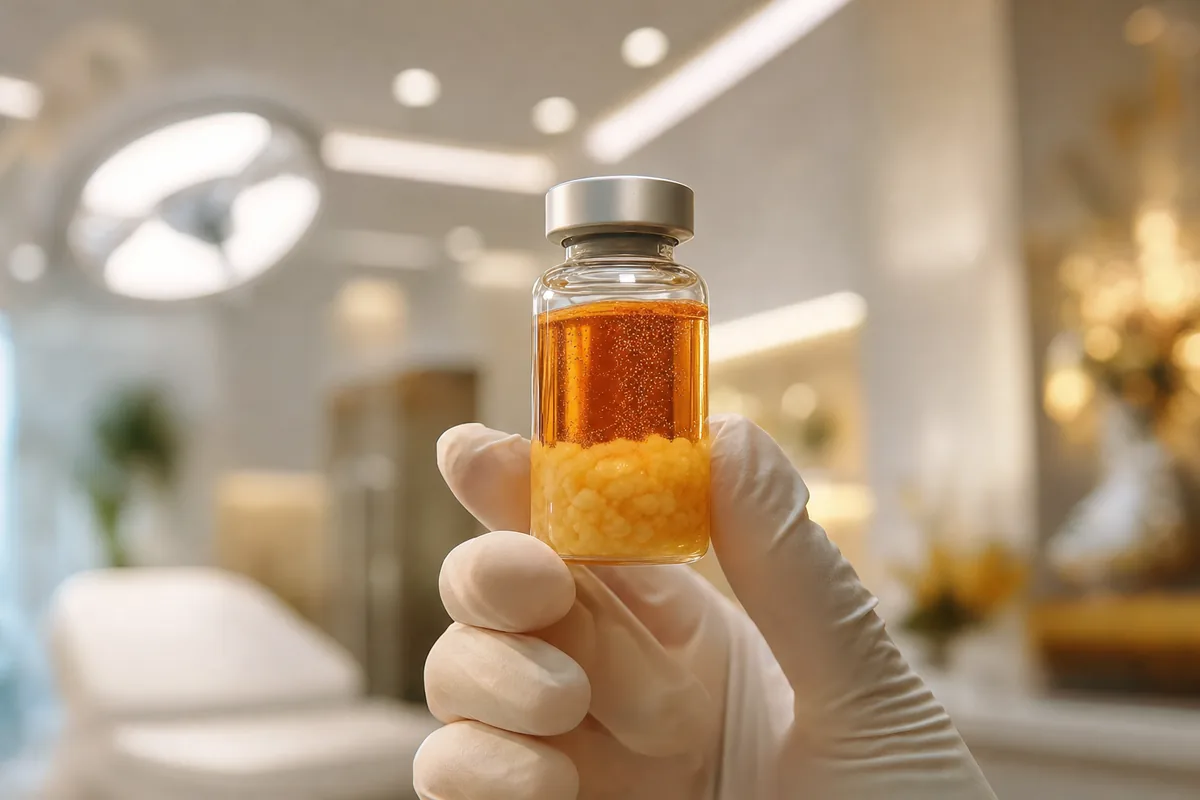
SVF (stromal vascular fraction) is a biological fraction obtained from the person's own fat tissue and containing various cell types. Within this structure,
- Mesenchymal stem cells
- Endothelial cells
- Connective tissue cells
- Cellular components that trigger growth factors
are found.
One important point is this: SVF is not an artificial substance introduced from outside. It is obtained from the person's own tissue and therefore carries no risk of immune incompatibility. However, this does not mean that the procedure will have the same effect in every patient.
What Is the Purpose of Stem Cell Support After a Hair Transplant?
The support that stem cells provide after a hair transplant does not directly claim to "grow new hair". The main aim is to support the existing surgical procedure biologically.
This support is relevant in the following areas:
- Supporting microcirculation in the scalp
- A more balanced tissue repair process
- Improving the biological environment around the transplanted grafts
- Preserving tissue quality during recovery
For this reason, SVF treatment is not a substitute for a hair transplant; it is a complementary approach when applied to a suitable patient with the correct indication.
Possible Effects on Graft Adaptation
Graft adaptation is one of the most frequently asked-about topics after a hair transplant. SVF support may make indirect contributions to this adaptation process.
The main topics highlighted in the scientific literature are:
- Supporting tissue nourishment around the grafts
- Helping the transplanted grafts to take
- Helping to prevent excessive fibrosis (hard tissue formation) during healing
- Preserving the elasticity of the scalp
However, there is an important fact that must be underlined here: whether a graft takes or not does not depend solely on the stem cell treatment. Surgical technique, the way the grafts are harvested and placed, the patient's general health, smoking, alcohol consumption and the structure of the scalp are the main determining factors.
Who Might It Be Suitable For?
SVF-assisted approaches are not automatically suitable for every hair transplant patient. Suitability must always be determined by an individual assessment.
In general,
- People who have previously had a hair transplant and whose tissue quality has weakened
- Patients thought to have circulation problems in the scalp
- Individuals with realistic expectations who wish to support their recovery biologically
may be considered.
Who Is It Not Suitable For?
As with any medical procedure, there are clear limits here too.
Stem cell support is not recommended, or offers limited benefit, in the following situations:
- Patients with an active infection
- Uncontrolled systemic diseases
- Individuals who are not basic surgical candidates for a hair transplant
- People who expect stem cell treatment "on its own to grow hair"
Correct patient selection is of critical importance for both medical ethics and long-term satisfaction.
Risks and Realistic Expectations
Because SVF is obtained from the person's own tissue, it is generally considered safe. However, it is not correct to present it as a "risk-free" procedure.
Possible effects include:
- Temporary tenderness at the treatment site
- Mild oedema or bruising
- Disappointment if expectations are not realistic
For this reason, the patient needs to understand clearly that the procedure is a supportive method.
An Expert Perspective
Biological support approaches after a hair transplant are one of the developing areas of aesthetic surgery. However, as with any new method, an approach free from exaggeration and grounded in scientific evidence should be adopted.
Assoc. Prof. Dr. Çiğdem Karadağ, who has international publications in the literature on stem cells (SVF), takes an approach grounded in her academic background that puts patient safety, correct indication and the management of realistic expectations at the centre of hair transplant and complementary treatments. Rather than a "same procedure for everyone" mindset, assessing each patient according to their own biological and clinical characteristics is, in the long term, the most appropriate approach in terms of both health and satisfaction.
To book an appointment with Assoc. Prof. Dr. Çiğdem Karadağ, you can use the Online Appointment page.
Frequently Asked Questions
Does Stem Cell Treatment After a Hair Transplant Grow Hair?
No. Stem cell (SVF) treatment is not a method that grows new hair on its own. The aim is to support the recovery process and graft adaptation after a hair transplant.
Is It Used for Every Hair Transplant Patient?
No. It is not necessary or suitable for every patient. Suitability is assessed based on the condition of the scalp, the patient's general health and their expectations.
Does a Hair Transplant Fail Without Stem Cell Support?
No. Stem cell support is not essential for a successful hair transplant. Surgical technique and correct planning are the main determining factors. Stem cells are only a complementary form of support.
When Is the Treatment Carried Out?
SVF support can usually be planned in the same session as the hair transplant or shortly afterwards. The timing is determined according to the patient's condition. If the patient has a skin problem (eczema, etc.), SVF is first applied before the hair transplant to calm and treat the skin; once the skin has healed, the hair transplant can be performed safely.
When Are the Results Seen?
The effects of stem cell treatment are not assessed as a separate "result" but as a more balanced progression of the recovery process. The final results of the hair transplant appear over the course of months, as in the standard process.