For most people, the terms plastic surgery and aesthetic surgery are used interchangeably. However, although they appear to work in similar areas, they actually have quite different goals and areas of application. This article is designed to identify the differences between these two disciplines and help you understand when each one is used.
Definitions of Plastic Surgery and Aesthetic Surgery
What Is Plastic Surgery?
Plastic surgery is derived from the Greek word “plastikos”, meaning “to shape”. Plastic surgery is a range of surgical procedures performed to correct or improve the shape or function of the body. Most often, plastic surgeons work to treat congenital defects, burns, injuries or diseases.
What Is Aesthetic Surgery?
Aesthetic surgery involves a range of procedures usually performed to improve a person's appearance. It aims to make a specific change to the person's body. It is also often called “cosmetic surgery” and includes procedures such as breast augmentation, rhinoplasty (nose surgery), liposuction (fat removal) and abdominoplasty (tummy tuck).
Differences Between Plastic Surgery and Aesthetic Surgery
Purpose
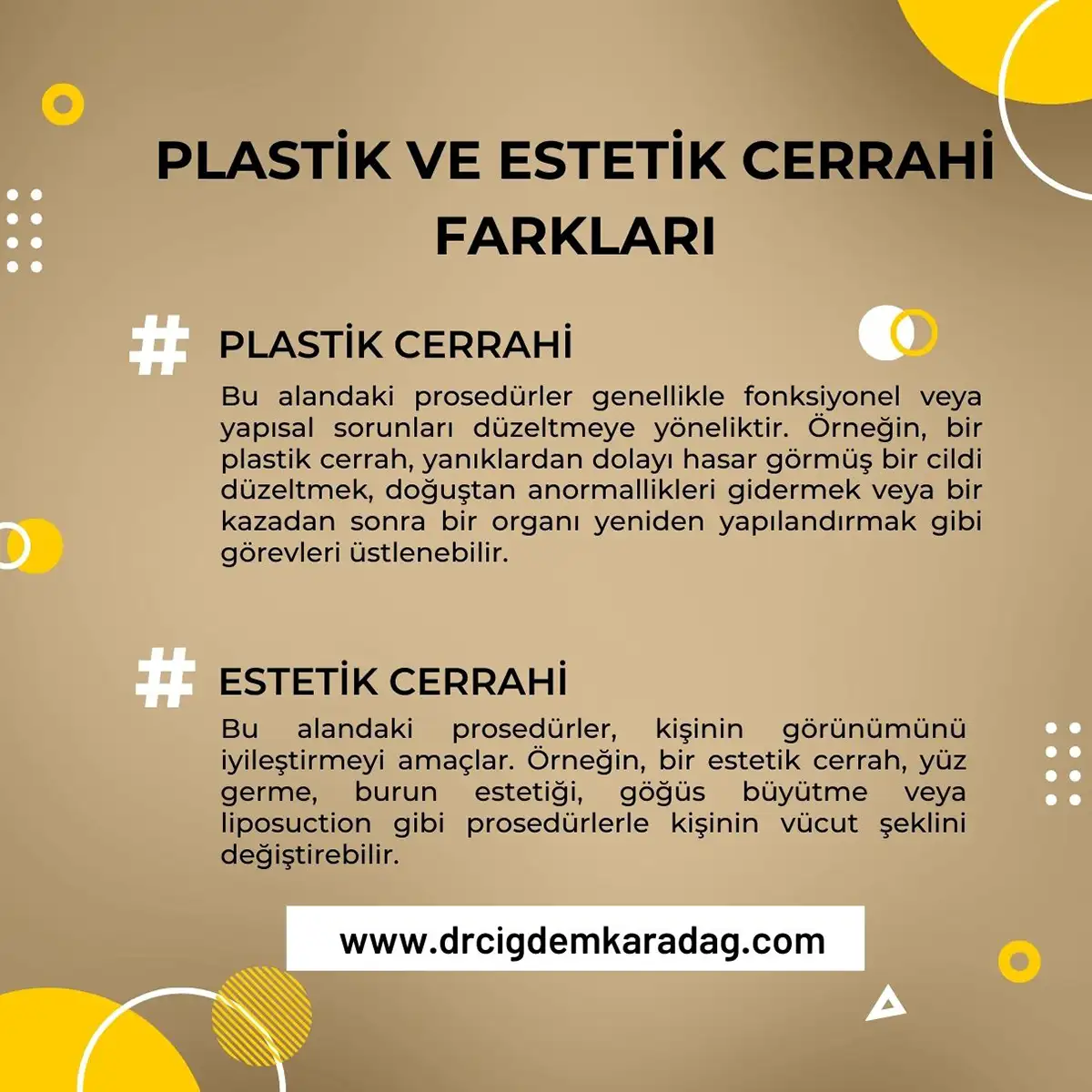
Plastic Surgery: Procedures in this field are generally aimed at correcting functional or structural problems. For example, a plastic surgeon may take on tasks such as repairing skin damaged by burns, correcting congenital abnormalities or reconstructing tissue after an accident.
Aesthetic Surgery: Procedures in this field aim to improve a person's appearance. For example, an aesthetic surgeon may change a person's body shape with procedures such as a facelift, rhinoplasty, breast augmentation or liposuction.
Areas of Application
Plastic Surgery: Plastic surgery has a wide range of applications. These may include correcting congenital deformities, repairs after burns and accidents, or reconstructing a part of the body damaged in an accident.
Aesthetic Surgery: Aesthetic surgery usually focuses on specific areas, such as facial, breast and body contouring procedures.
Training and Certification
Plastic Surgery: After medical school, plastic surgeons undergo specialist training in plastic surgery. This training usually takes many years.
Aesthetic Surgery: Aesthetic surgeons come from different medical disciplines, such as plastic surgery, dermatology and general surgery, and receive additional training and certification in aesthetic surgery.
These examples show the fundamental differences between plastic surgery and aesthetic surgery. Both disciplines aim to improve the shape and function of the body, but they differ in their areas of application, goals and training requirements. Therefore, when considering a procedure, a careful assessment should be made to determine which type of surgeon you should see.
What is plastic surgery and what does it deal with? Which conditions does a plastic, reconstructive and aesthetic surgery doctor treat? In Milliyet newspaper, you can also read this article. (in Turkish)
Common Confusions and Myths
There is a misconception that plastic surgery is only about cosmetic operations. In fact, the aim of plastic surgery is to improve bodily functions and/or provide a normal appearance. Aesthetic surgery, on the other hand, aims to make a person's appearance more attractive and is usually an elective procedure.
Which Surgeon Should I See, and When?
If the reason for surgery is to correct a bodily function or remove an abnormality, you would usually see a plastic surgeon. On the other hand, if you want an aesthetic improvement, you can see an aesthetic surgeon. However, these decisions are best made after a detailed assessment and consultation with your doctor.
Safety and Patient Assessment in Aesthetic Surgery
As well as being a discipline that aims to improve appearance, one of the most important goals of aesthetic surgery is to carry out safe and effective procedures. Plastic, reconstructive and aesthetic surgery specialist Assoc. Prof. Dr. Çiğdem Karadağ continues her work in line with this goal. With a scientific approach, Dr. Karadağ aims to create a treatment plan suited to each patient's needs using current techniques and technologies.
The foundation of safe and effective procedures in aesthetic surgery is the patient's health and safety. Assoc. Prof. Dr. Karadağ begins with a comprehensive preliminary assessment. This assessment covers the patient's general health, existing health problems, medication use and expectations of surgery. This information is vital for the procedure to be performed safely and effectively.
The procedures performed by Assoc. Prof. Dr. Karadağ cover all areas of aesthetic surgery. These include facial aesthetics, body contouring, breast aesthetics and skin rejuvenation. Each procedure is tailored to the individual needs and expectations of each patient.
As with any medical procedure, aesthetic surgical procedures also carry risks; these are discussed in detail at the consultation. Patient follow-up throughout the recovery process is of great importance for maintaining the results. During this process, Dr. Karadağ provides her patients with all the necessary information and support.
In conclusion, Assoc. Prof. Dr. Çiğdem Karadağ (in Turkish) adopts a comprehensive approach to performing aesthetic surgical procedures safely and effectively. While this approach sets patients' health and safety as the primary goal, it also aims to achieve the expected aesthetic results.