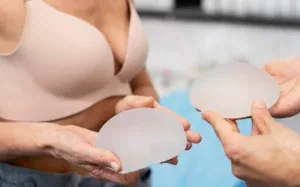
If you are considering breast lift surgery, it is natural to have questions. Deciding whether to have surgery requires careful consideration, and the only way to make an informed choice is to understand the procedure and its possible complications.
We have listed 10 of the questions our patients most frequently ask about breast lifts before having breast lift surgery.
Our recommendations and answers are general responses and should not be taken as personalised medical advice.

The Most Common Breast Lift Questions
As you go through this guide, you can gain in-depth knowledge about breast lift surgery. It is important to discuss all your concerns with your surgeon face to face before having surgery.
What Is a Breast Lift (Mastopexy)?
Over time, a woman's breasts change shape and lose their firmness. This can be due to a variety of reasons, such as pregnancy and breastfeeding, gravity, age and weight changes.
Breast lift surgery is an operation that involves removing excess skin and reshaping the breast tissue, giving the breast a fuller and more lifted appearance. This operation can also help reduce the size of a woman's areola (the dark, ring-shaped area of skin around the nipple) if it has enlarged over time.
1. What Can I Expect During My Consultation?
During your consultation, you should expect to be asked a variety of questions, including about your health and lifestyle as well as why you want to have this procedure. Some questions may seem very personal, but it is important to answer them as accurately and honestly as possible. These questions are asked in a medical context to make sure you are a good candidate for surgery and to assess the right plan of action for you.
By answering sincerely, you increase your chances of success, reduce the likelihood of complications and protect your health.
Your surgeon will probably ask you about some of the following:
- Your medical history,
- Any family history of breast cancer,
- Any use of medicines, supplements or tobacco,
- Your expectations,
Your surgeon may also carry out a brief physical examination to assess your general health, examine your breasts, and take measurements and photographs. If you have any questions or concerns, this is a great time to raise them.
Towards the end of your consultation, your surgeon will probably discuss treatment options and recommend a plan of action. You should also go over the possible risks and complications and talk about the use of anaesthesia during the procedure.
2. Will a Breast Lift Change the Size of My Breasts?
No. Breast lift surgery is designed to change the contour and position of your breasts, not their size. However, your breasts may appear smaller after a lift. If you want to change the size or fullness of your breasts, you will need to undergo breast augmentation or breast reduction surgery. If desired, these operations can often be completed at the same time.
3. What Steps Should I Take to Prepare for My Breast Lift Surgery?
You and your surgeon will prepare a personalised plan to meet your specific needs. Common preparations include:
- Medical evaluation and laboratory tests,
- Breast ultrasound and/or mammography depending on your age,
- Stopping smoking if you currently smoke.
Your plan will also cover anything specific you need to do on the day of your procedure, how to carry out your post-operative care and how to schedule the necessary follow-up appointments.
You should arrange transport and care in advance. You should not travel to and from the surgery on your own, and it is important to have someone with you for at least one night after the procedure.
4. What Are the Inherent Risks of Breast Lift Surgery?
As with all surgery, breast lift surgery carries risks. An important part of your decision is weighing the potential benefits against the possible risks and complications. By being open during your consultation, you can reduce the likelihood of any problems arising. Some of the possible risks you may encounter are:
- Unwanted scarring.
- Bleeding
- Infection
- Temporary or permanent changes in sensation.
- Breast asymmetry or irregularities in shape and contour.
- Complete or partial loss of the nipple and/or areola.
- Recurrence of sagging.
Not all of these risks apply specifically to you; they are intended more as a general guide to possible risks. You should talk to your surgeon about the risks you are most likely to face.
5. What Happens During Breast Lift Surgery?
Before your breast lift surgery, you will be given general anaesthesia.
The procedure begins with an incision. There are many techniques and incision patterns that can be used for a breast lift. Determining which one will be most suitable for you depends on a number of factors, including:
- The size and shape of your breasts and areolas.
- The elasticity and quality of your skin.
- Excess skin
- The degree of sagging of your breasts.
Most often, the incisions run from the areola down to the crease of your breast and then horizontally along the crease (inverted T incision).
Once the incisions have been made, your surgeon will reshape the sagging tissue, reposition the areola and nipple, reduce the size of enlarged areolas and remove excess skin. During repositioning, the nipples/areolas are almost never removed or detached from the underlying breast tissue. This is a common misconception. The incisions are then closed with aesthetic sutures and covered with special tapes to relieve tension on the wound edges.
6. Does Breast Lift Surgery Leave Scars?
All breast lift operations will leave scars. These scars are in an inverted T shape, that is, faint scars around the areola, running from the areola down to the breast crease, and also in the breast crease. The incisions are permanent, but scars vary greatly and become faint over time. If you have concerns about scarring, make sure you raise this during your consultation.
7. What Should I Expect During Recovery After Breast Lift Surgery?
Immediately after breast lift surgery, your incisions will be covered with dressings or bandages. While you heal, it is important to wear the special bra recommended by your doctor to support your breasts and minimise swelling.
Before your procedure, you and your surgeon will go over all the recovery instructions, such as how to care for your breasts while healing and which medications you need to take. Your surgeon will also inform you about when you can resume your normal activities and how to carry out follow-up care.
As the success of your procedure depends on proper healing, make sure you follow your recovery plan. If you do not give yourself the time you need to heal, expose your incisions to strain and movement, or continue to smoke, this can adversely affect your results and harm your health.
8. How Long Do the Results of a Breast Lift Last?
You will see the results of your breast lift immediately, but the final results will become more apparent over the next few months as the swelling subsides and your breasts heal fully. These results will be long-lasting, but your breasts will probably continue to change due to gravity and age. To maintain your youthful appearance for as long as possible, make sure you keep a healthy lifestyle and maintain your current weight.
If you are planning to have children or to lose a significant amount of weight, you should discuss this with your surgeon before breast lift surgery.
9. Can I Have a Breast Lift If I Plan to Have More Children?
Although it depends on the technique used, breast lift operations generally do not affect function, which means that becoming pregnant after surgery is usually possible. However, it is generally recommended to wait until you have completed your family plans. The weight gain during pregnancy and the changes in your breast tissue can reverse the benefits of your breast lift. In addition, if you plan to breastfeed, you may have more difficulty doing so after a breast lift.
10. Remember to Ask Every Question You Have
It is extremely important that all your questions about breast lifts are answered before you make your final decision. If you have any concerns, make sure you pass them on to your surgeon. There is absolutely no reason to rush a procedure like this, and doing so could leave you with unsatisfactory or unwanted results.
By taking your time, you can build a relationship with your surgeon that will help you better judge whether she is the right doctor for you. Take an active role in your consultations; ask questions about both the procedure and your doctor.
The results of plastic surgery can make a positive contribution to self-confidence and body image, but because they are permanent, make sure you weigh up your decision carefully. Get all the information you need to make an informed choice, take control and do what is right for you.
Breast lift or augmentation! Which one is right for you? For detailed information, click here.
For information about breast lift surgery, you can book an appointment with Assoc. Prof. Dr. Çiğdem Karadağ, who has been working in plastic surgery since 2009 and has her private practice on Bağdat Avenue in Istanbul.