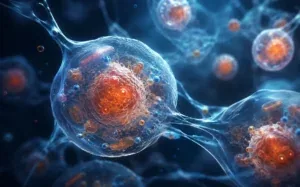
Exosomes (in Turkish) are natural vesicles released by cells into the extracellular environment. Exosomes contain structures made up of proteins, RNAs and lipids. Exosomes provide communication between different cells in our body. Exosomes stand out as a promising treatment option for preventing skin ageing.
The therapeutic effects of exosomes arise from their regenerative, anti-inflammatory and angiogenic (blood-vessel-forming) properties.
Advantages of exosome therapy
Some of the ways in which exosomes may contribute to anti-ageing treatment are:
Cell proliferation and migration
Exosomes contain various growth factors, cytokines and signalling molecules that stimulate the proliferation and migration of skin cells such as fibroblasts and keratinocytes. This helps improve skin thickness, texture and overall appearance.
Collagen synthesis
Exosomes can support collagen synthesis in fibroblasts by transferring bioactive molecules such as transforming growth factor-beta (TGF-β) and connective tissue growth factor (CTGF). Increased collagen production can help improve skin elasticity, firmness and texture, reducing the appearance of wrinkles and fine lines.
Extracellular matrix (ECM) remodelling
Exosomes can regulate the production and breakdown of extracellular matrix proteins such as collagen, elastin and hyaluronic acid, which are important for maintaining the skin's structure and moisture balance. This helps the skin regain its natural support structure and improves its appearance.
Angiogenesis
Exosomes can support blood vessel formation by transferring pro-angiogenic factors such as vascular endothelial growth factor (VEGF) to endothelial cells. An improved blood supply can increase the delivery of oxygen and nutrients to the skin, supporting healing and rejuvenation.
Immunomodulation
Exosomes can suppress inflammation and support tissue repair by regulating the immune response. By reducing inflammation, they may help minimise possible side effects and complications associated with skin rejuvenation treatments.
Antioxidant effects
Exosomes can protect skin cells from oxidative stress and damage by transferring antioxidant molecules such as superoxide dismutase (SOD) and glutathione peroxidase (GPx). This may help maintain skin health and reduce the signs of ageing.
We also recommend reading this article on “What Are Exosomes? Benefits and Treatment Methods”.
How Exosomes Act on Skin Ageing
In particular, exosomes obtained from the person's own tissues have been studied as a potential treatment option for improving skin texture.
The way exosomes obtained from the person's own tissues act on skin tissue involves several mechanisms, including the following:
Stimulation of collagen production:
Exosomes contain growth factors and other molecules that can stimulate collagen production in the skin, leading to improved skin texture and tone.
Promotion of skin cell proliferation:
Exosomes contain factors that promote the proliferation of skin cells, which can lead to the formation of a thicker and smoother epidermis.
Skin hydration:
Exosomes contain molecules that can increase skin hydration and thereby help improve skin texture.
Reduction of oxidative stress:
Exosomes contain antioxidants that may help reduce oxidative stress in the skin, which can contribute to a more youthful and radiant appearance.
Regulation of inflammatory responses:
Exosomes contain anti-inflammatory molecules that can help regulate inflammatory responses in the skin; this can improve skin texture and reduce the appearance of fine lines and wrinkles.
Anti-inflammatory effects:
Exosomes obtained from the person's own tissues contain anti-inflammatory molecules, such as cytokines and microRNAs, that may help reduce the chronic inflammation that contributes to age-related skin conditions such as wrinkles, sagging and pigmentation.
Collagen synthesis:
Exosomes obtained from the person's own tissues contain growth factors and other molecules that can support collagen synthesis, which is necessary for maintaining skin elasticity and reducing the appearance of fine lines and wrinkles.
Epidermal differentiation:
Exosomes obtained from the person's own tissues contain molecules that can support epidermal differentiation, improving skin barrier function and hydration.
Antioxidant effects:
Exosomes obtained from the person's own tissues contain antioxidants that may help protect skin cells against oxidative stress, which can contribute to skin ageing.
Extracellular matrix remodelling:
Exosomes obtained from the person's own tissues can also remodel the skin's extracellular matrix; this is important for maintaining the structure and function of the skin.
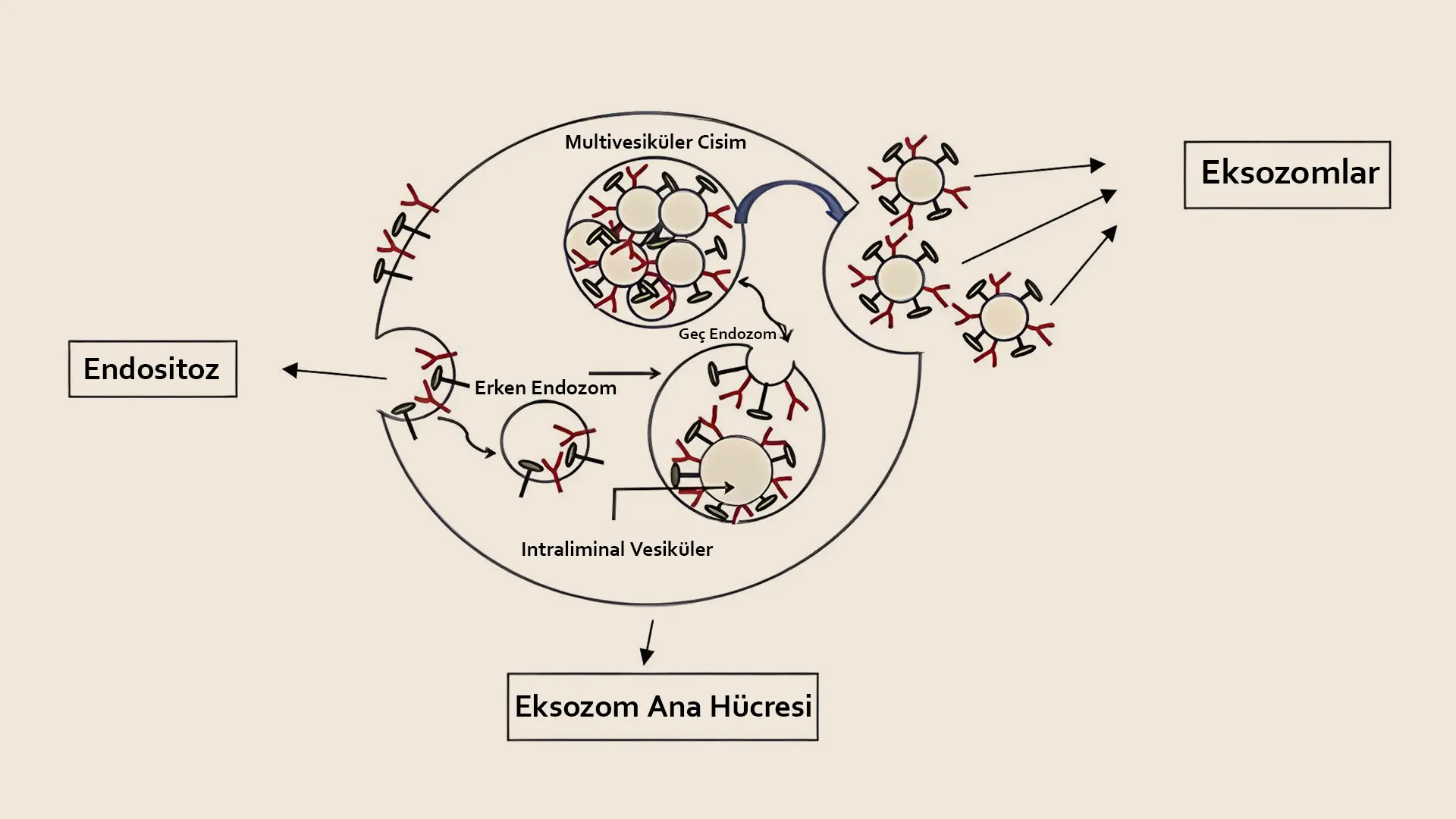
(The figure above has been modified from: Bozkurt, S. (2018). Eksozomlar ve kanserdeki rolleri. Dicle Tıp Dergisi, 45(9), 209–217.)
Indications for Skin Ageing Treatment
Owing to their regenerative, anti-inflammatory and angiogenic properties, exosomes obtained from the person's own tissues have shown potential in addressing skin ageing.
Ideal patients for treating skin ageing with exosomes obtained from their own tissues may include those who:
Are looking for non-surgical options: Patients seeking non-surgical alternatives to address signs of ageing such as wrinkles, fine lines and age-related volume loss may benefit from exosome therapy using their own tissues.
Are experiencing age-related skin changes: Patients experiencing age-related skin changes (such as reduced skin elasticity, collagen breakdown and loss of subcutaneous fat) may find exosome therapy using their own tissues beneficial in promoting collagen synthesis, supporting skin cell proliferation and migration, and protecting cells from oxidative stress.
Would like a more natural approach: Patients looking for a more natural treatment option for skin ageing may find exosome therapy using their own tissues suitable, as it activates the body's own regenerative abilities.
People with sensitive skin or allergies: For patients with sensitive skin or those allergic to certain components of synthetic fillers, exosome treatment obtained from the person's own tissues may be a suitable option.
Information About Exosome Treatment for Skin Ageing
Skin ageing shows itself over time with signs such as loss of elasticity, wrinkles and sagging. For those who want to reduce these signs, exosome treatment is one of the options that can be considered.
Exosomes contain biological structures that support the skin's natural renewal process, improve intercellular communication and may contribute to skin renewal. Turning to this treatment to reduce the signs of skin ageing and regain a young, healthy-looking skin is becoming increasingly popular.
To get more information about exosome treatment for skin ageing and to assess whether this treatment is suitable for you, you can contact Assoc. Prof. Dr. Çiğdem Karadağ. The treatment plan is determined individually after the examination.
You can use the link below to request an appointment.